
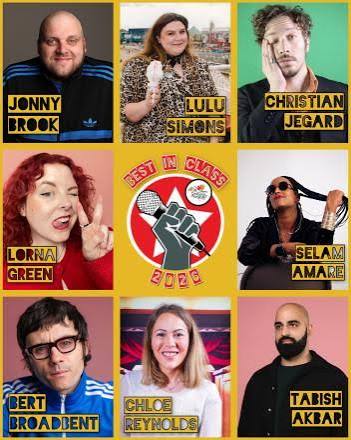
Best in Class is a hilarious Free Fringe production that shines a light on working-class artists who might otherwise not be able to access the Fringe. The iteration we saw dealt with familiar topics such as transgender rights, xenophobia and, obviously, social standing, all of which not only had the audience in hysterics but also gave them plenty to think about. With a rotating cast of brilliant comedians every night, every show is completely different while still showcasing the need to make the Fringe more accessible!
I am going to start this review by being totally honest about my first (and only) experience of the Edinburgh Fringe and the costs associated with it. I think it is important to note that I only went as a punter and consumer of shows, and for just six days, but over that time I must have spent around £1,000 (including accommodation, flights and day-to-day costs).Because of this, I cannot imagine the immense price that people doing the full month-long Fringe would have to fork out, especially when there is no guarantee that enough people will discover their show. This is why programmes like Best in Class are so important, as they are a totally crowd-funded show that gives working-class people an opportunity to share their craft without having to fork over heaps of money with the possibility of maybe making some of it back.
Opening the entire show was the fantastic Hannah Wheatman, who helped to explain the premise of the event but also made a conscious effort to ensure the audience stayed excited for each and every act gracing the stage. She started the wonderful line-up by sharing a collection of brilliant jokes while giving her honest and real experiences of navigating the world as a trans woman. This is not something that is discussed at many stand-up events, and so seeing Hannah talk about the things she has gone through in an equally hilarious and honest way can only have a positive effect on any trans people in attendance, which is very important now more than ever! The next comedian to grace the stage was the brilliant Christian Jegard, who delivered a much drier comedy-infused set full of groan-worthy one-liners, which I have to admit is my favourite type of comedy! At one point in the show, Christian borrowed a watch from an audience member in the front of the crowd, only to seemingly never give it back while he remained on stage. While the person who had offered his watch looked visibly on edge throughout, the crowd found this absolutely hilarious! It was such a simple interaction, but it demonstrated the benefits of having comedians who are comfortable engaging directly with their audience. Rather than simply delivering a rehearsed set, Christian was able to incorporate an unexpected interaction into his performance, creating a memorable moment that would likely be different every night. Completing the line-up of working-class comedians was the amazing Tabish Akbar, who focused on the rise of racism ripping through England in particular. Taking on such a politically charged and divisive topic in a show like this one can be a very dangerous inclusion, but Tabish was able to effortlessly highlight these issues through his comedic talents while still giving the audience something to think about. One of the highlights of his set was the sequence in which he talked about being cast in a school Nativity. However, he looked incredibly out of place, as he was not only one of the few people from a different background but also supposedly had a beard, which did make him look somewhat out of place. This was another example of how the comedians were able to take personal experiences and turn them into hilarious observations while still addressing much bigger social issues. It is this combination of comedy and social commentary that makes Best in Class such an important addition to the Fringe. What I particularly enjoyed about the show was the variety between each performer. While every comedian was united by their working-class backgrounds and the wider purpose of the production, they all had completely different comedic styles. This ensured that the show never became repetitive and meant there was something for everyone to enjoy.
In conclusion, Best in Class is a very important variety show that highlights the struggles working-class artists face when trying to find stages to showcase their skills. As a part of the Free Fringe programme, this show has a clear and obvious message of inclusion and opportunity underpinning the entire production. Through hilarious yet highly accessible and relatable observations about topics such as trans rights, racism and social standing, this show is not only incredibly important but also a fantastic hour of comedic talent! The rotating line-up also ensures that no two performances are necessarily the same, making Best in Class a brilliant example of how the Fringe can provide opportunities to performers who may otherwise struggle to find a platform. Ultimately, this is exactly the sort of production that demonstrates why accessibility within the arts matters. It provides talented performers with an opportunity to showcase their skills while giving audiences the chance to discover comedians they may never otherwise have encountered. I would rate this show 4 out of 5 stars!


