

The first scene in which the audience is introduced to the rather eccentric Deb is when she makes her way to a job interview, which turns out to be very different from what she initially thought she had applied for. I think it is almost a universal experience for those searching for a job to apply for a position and then discover mid-interview that either what they thought they had applied for is not what they actually applied for, or that they had overlooked a part of the job listing that would have made them decide against pursuing it as a career. I think many people who have held the same job for multiple years are not aware that job hunting can be very difficult. Firing off endless applications means that sometimes details are overlooked or ignored, so seeing someone deal with the consequences as they happen on stage is something many people (myself included) will be able to relate to. The character herself is initially presented as highly confident and self-assured as she enters with the intention of proving herself to whoever may be conducting the interview. This causes Deb to pull out all her tricks, including a series of brilliant jokes (including a vocal stim I have recently developed in interviews from The Sound of Music — “Let’s start at the very beginning, a very good place to start” — which I personally found hilarious), overcompensating with information, and even becoming highly performative around the space. These are all things people are likely to do during a job interview, making this scene a highly relatable yet hilarious sequence.

I have to say that this portrayal of the job-searching process has to be one of the most realistic yet entertaining depictions of something that every single person will experience at some point in their life. It is clear that the creative team had carefully considered not only the situation itself but also how the character—and many other people—would act in such circumstances. What is also very clever about this opening sequence is that the audience is introduced to Deb’s mindset as she imagines and acts out the whole situation before the interviewer has even entered the room, which creates a wonderful full-circle moment at the end of the show—but more on that later! The pinnacle of the story (as the name of the show would suggest) sees Deb pop to the toilet during her first shift as things start to go from bad to worse. After doing what she needed to do on her toilet break, Deb realises that she is out of toilet paper, which very quickly spirals into the early stages of a mental breakdown as she frantically panics about how she can escape the situation with the least amount of embarrassment. Combined with her fragile mental state, this leads to Deb utilising increasingly unique approaches to get out of this sticky situation. What I found particularly clever about this scene is the way Deborah Newton-Williams flawlessly captures not only the whimsical and initially comedic nature of the situation but also the tension and anxiety that such an experience would create when you are actually living through it. The tension for the audience was incredibly palpable as they watched Deb move through a range of emotions before finally spiralling as her options dwindled. After discovering a 2D drawing of Homer Simpson (which made total sense, as unusual drawings are a common sight in toilet cubicles across the UK), she befriends the flat image, moving from laughing and joking with the inanimate object to pleading for some form of divine intervention as she begins to lose hope. This not only made sense narratively but also demonstrated the decline in her mental state, as pleading with a 2D drawing is not something people do every day. In the closing moments of this scene, Deb decides that the best course of action is to use her socks to clean up her mess, only for this to cause the cistern to overflow. She then visibly reaches into the toilet to retrieve her sodden, dirty socks before throwing them across the stage. This was met with horrified gasps from the audience, which was exactly the reaction it was intended to provoke, and it certainly succeeded in getting a huge response from everyone in attendance.
One of the most powerful and moving sequences in the entire show, however, occurs during the closing moments, when our lead character is called into an HR meeting to discuss the aforementioned toilet incident. Overflowing with equal parts anxiety and remorse, Deb enters the meeting intending to accept any mental health support or advice that may be offered, having reached a point where she can no longer continue fighting on her own. As someone who has had their own experiences with mental health issues, I found this to be such an important and authentic moment in a person’s journey. It is often not until this point that someone is able to accept help, and that process cannot be rushed or forced. This scene is significant not only because it depicts someone asking for help but also because seeing this very honest milestone of acknowledgement represented on stage can only have a positive impact on audience members who may be going through something similar in their own lives. Throughout the conversation, Deb takes a metaphorical journey to interact with her younger self. This is particularly impressive because she is the only person on stage, yet she convincingly takes on the roles of both her younger and older selves, complete with flawless and distinct vocal changes that make it easy for the audience to understand who is speaking at any given moment. Not only was this sequence deeply moving, but it was also scattered with the perfect amount of jokes and classic Deb-isms, ensuring that the audience remained engaged throughout. At the end of this scene, however, comes an unexpected twist as it is revealed that the entire conversation and meeting were imaginary. The real HR representative only appears immediately after Deb fully accepts the help she may or may not have been offered. This reveal not only moved audience members but also demonstrated just how desperately Deb needs support.
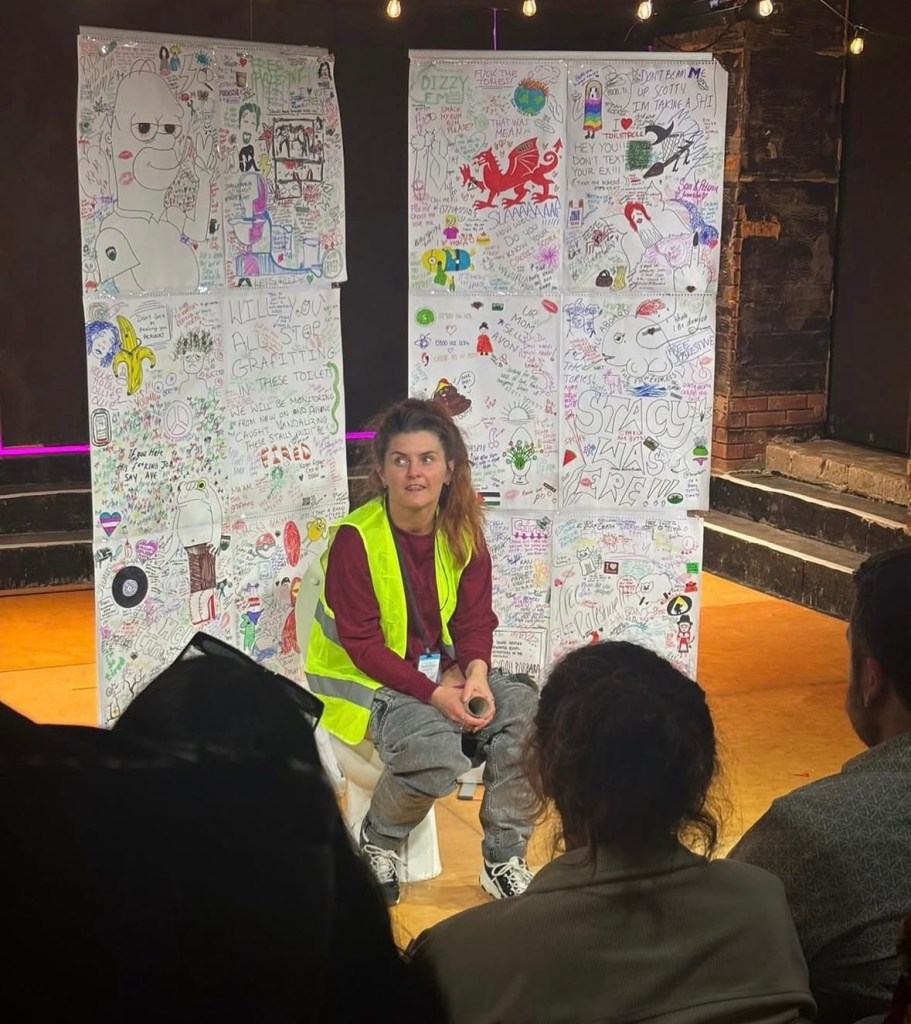
In conclusion, Thunderbum by Deborah Newton-Williams is an honest and relatable exploration of mental health, portrayed through a hilarious yet vulnerable everyperson character whom the audience can instantly connect with. This is due not only to the real-world setting and situation but also to the simplistic yet powerful writing that runs throughout the production. At the beginning, the audience is in fits of laughter, but by the end they are confronted with the true impact of mental health struggles, culminating in a powerful scene in which the lead character finally accepts help. It is such an important moment to highlight on stage and one that can only have a positive effect on anyone experiencing a similar journey. I would rate this show 5 out of 5 stars.


