
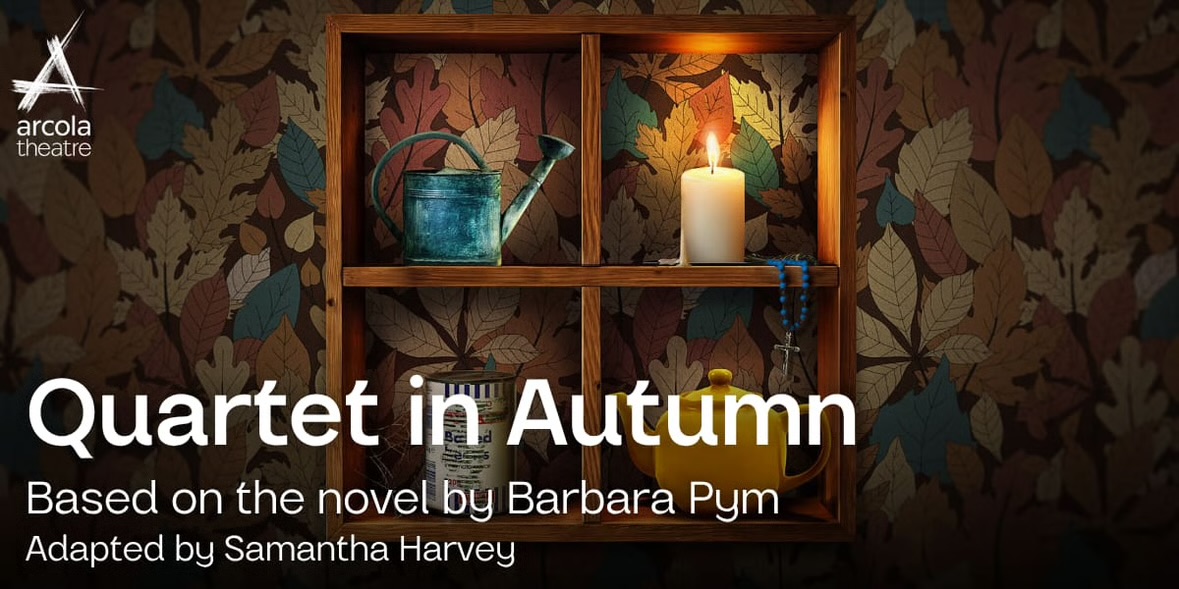
Back in my day, before streaming services such as Netflix became household essentials, sick days from school were spent resting and trying to get better. However, to help pass the time, I would often flick through the midday TV guide, which frequently contained some of the most outlandish shows ever created. It was during one of these sick days that I discovered the incredible Doctors, which followed the lives of fictional doctors in Letherbridge as they dealt with the everyday situations and characters that would pass through a local surgery. After stumbling across individual episodes, what began as casual viewing soon developed into what many would describe as an obsession. Not only did I watch the entire box set on demand, but I also made sure that every weekend, holiday, and sick day revolved around being awake and ready to sit in front of the television whenever a new episode aired. Before being tragically removed from production in March 2024, Doctors stood apart from many other soap operas. Rather than relying on explosive fights, miraculous character returns, or over-the-top disasters, it focused on workplace drama and the wide variety of people encountered by a local doctor’s surgery. Despite being off our screens for almost three years, my love for Doctors remains somewhere deep down, and from the very moment Quartet in Autumn began, I was instantly transported back to the golden age of daytime television drama. Based on the 1977 novel of the same name by Barbara Pym, Quartet in Autumn at the Arcola Theatre is primarily set within the confines of an ageing office block, where four mature co-workers are preparing for their impending retirements. Much like Doctors, the production is deliberately stripped back. There are no pyrotechnics, elaborate choreography, or spectacle-driven set pieces. Instead, the story unfolds at a careful and measured pace, allowing the audience to focus entirely on the human drama taking place before them.
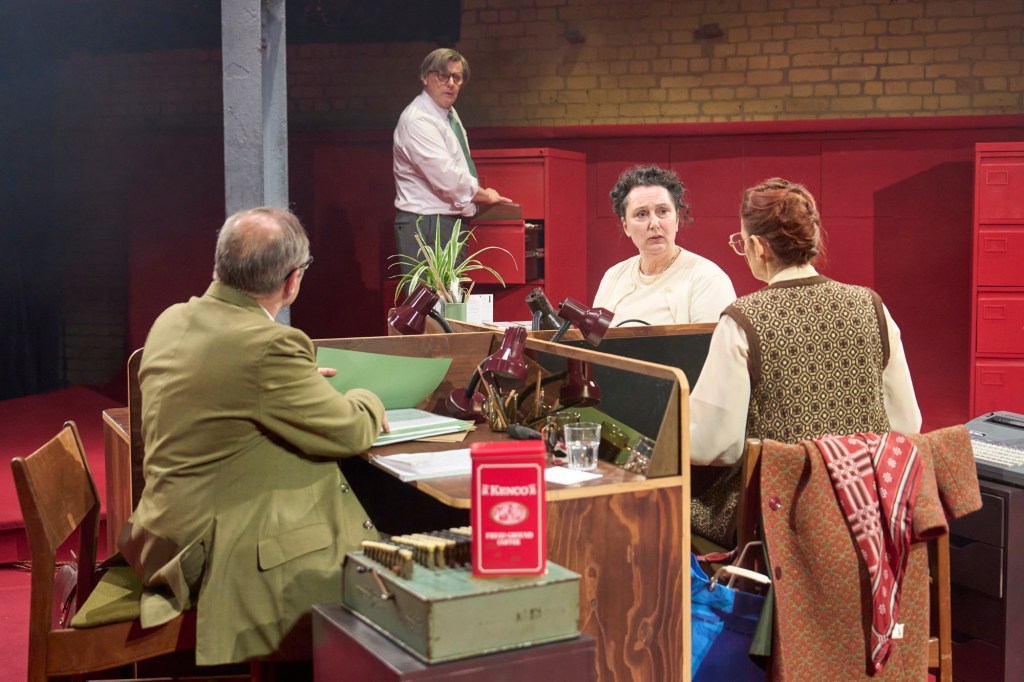
One particularly clever aspect of the production is how naturally it establishes the characters’ long-standing familiarity with their workplace. It is immediately apparent that these individuals have spent years together in the same office. They sit in the same seats, move effortlessly around the space, and have designated places for their coats, cups, and personal belongings. This subtle attention to detail helps the audience understand just how deeply ingrained these routines have become and, in turn, why retirement feels so daunting. While the relationships between the characters are often defined by proximity rather than genuine friendship, the production successfully creates a believable bond between them that later strengthens the story’s exploration of loneliness and isolation. The dialogue is equally effective. The play is written in a way that feels entirely authentic to its characters, capturing conversations about family, changing social attitudes, and the frustrations that often accompany ageing. Samantha Harvey’s adaptation demonstrates a clear understanding of these personalities and allows the audience to feel as though they are simply observing real people going about their daily lives. One of the most impressive techniques employed throughout the production is its use of overlapping storytelling. At various points, all four characters simultaneously share personal anecdotes directly with the audience. One voice briefly takes prominence before another seamlessly continues with an entirely different memory or experience. On paper, this approach could easily become confusing, but the execution is remarkably clear and engaging. The transitions feel natural rather than choreographed, reinforcing the sense that these are people who have known each other for years and have developed an instinctive rhythm in one another’s company. It is an inventive piece of staging that adds momentum to the production while deepening our understanding of each character.
My favourite character in the production was Letty, wonderfully portrayed by Kate Duchêne. At first, Letty appears to be a placid and easy-going presence who takes it upon herself to keep the office atmosphere cheerful and positive. However, beneath this sunny exterior lies one of the show’s most poignant examples of loneliness. Early in the play, Letty speaks excitedly about plans to move in with a close friend after retirement. Together they have viewed potential properties and begun preparing for the next chapter of their lives. Unfortunately, those plans are abruptly derailed when her friend enters a new relationship with a preacher, leaving Letty to face retirement alone. Throughout the play, she makes it clear that she has no desire to pursue a romantic relationship herself, making the loss of this companionship particularly painful. Kate Duchêne subtly conveys both the hurt and underlying jealousy that accompany this betrayal, creating a deeply sympathetic character. What I particularly enjoyed was Letty’s development over the course of the story. By the latter stages of the production, after her friend’s relationship has ended, she finds herself in a position of control rather than dependency. It is suggested that she is beginning to prioritise her own happiness and independence, bringing a satisfying sense of growth to her character arc.
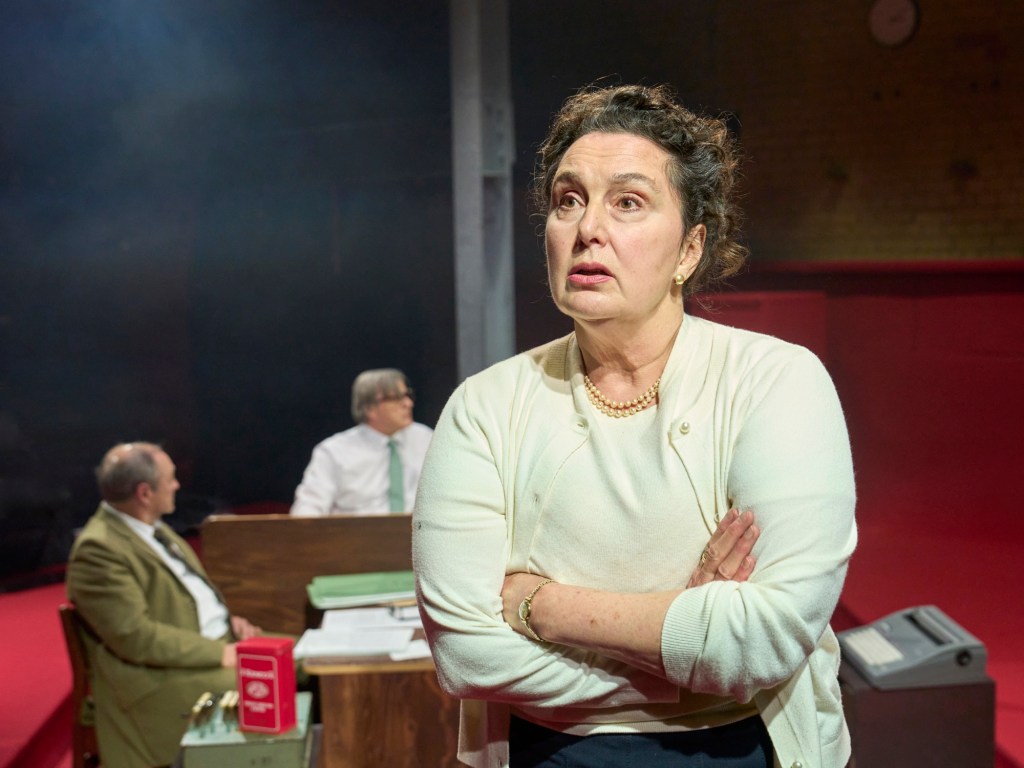
Serving almost as Letty’s opposite is the cynical and often crotchety Norman, played brilliantly by Paul Rider. Norman is responsible for many of the show’s funniest and most downbeat observations. One especially memorable scene sees him ranting about how women often mention significant events without providing enough information, leaving him to ask questions only to be accused of prying. The complaint stems from a colleague briefly mentioning a recent medical procedure without elaborating further. While his frustration is clearly played for laughs, it immediately reminded me of conversations I have had with my own grandparents, once again highlighting how relatable these characters feel. Yet beneath Norman’s gruff exterior lies a genuine sense of care and affection. As the story unfolds, we discover that he regularly brings coffee for one of his female colleagues and faithfully prepares her drinks as part of a long-standing arrangement between them. These quieter moments gradually strip away his negative persona and reveal a much warmer individual beneath the surface.
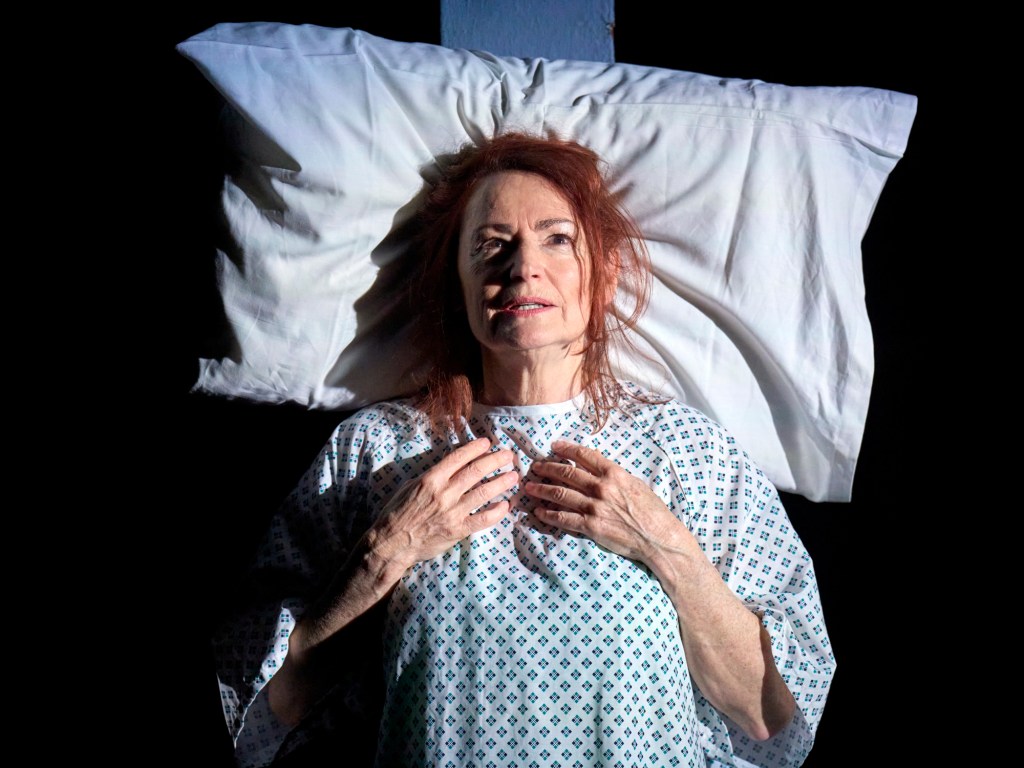
Perhaps the most complex and fascinating character in the production, however, is Marcia, portrayed magnificently by Pooky Quesnel. Initially, Marcia appears to be an efficient, no-nonsense employee who prefers to avoid office gossip and social interaction. As the play progresses, however, we begin to uncover a far more troubled individual. Following a medical procedure, Marcia develops an unhealthy fixation on the surgeon who treated her. At one point, she even visits his home uninvited simply to observe him from a distance. This leads to an intense and uncomfortable scene in which she stands staring up at a model representation of his house, only to discover that he is married with children. The moment is both heartbreaking and unsettling, highlighting the depth of her loneliness. The audience also learns that Marcia’s need for order extends far beyond the workplace. Her home contains an extensive collection of carefully organised tins, canned goods, and milk bottles, all stored in preparation for some unspecified future emergency. What initially appears eccentric gradually reveals itself to be symptomatic of much deeper anxieties. Following her retirement alongside Letty, Marcia begins a devastating downward spiral. During one of the few scenes set outside the office, she quietly hides food from a meal in a carrier bag, hinting at her increasingly unhealthy relationship with eating. While the moment generates some laughter, it also serves as the first clear indication that something is seriously wrong. Her deterioration eventually leads to a hospital stay in the closing stages of the play. One of the most powerful scenes in the entire production sees Marcia delivering a fragmented and emotionally raw monologue from her hospital bed. Through both her words and her physical performance, Pooky Quesnel vividly conveys a woman who is struggling both mentally and physically. It is a deeply affecting piece of acting and undoubtedly one of the highlights of the evening.

The final member of the quartet is Edwin, played by the excellent Anthony Calf. Throughout the play, Edwin serves as a source of wisdom, stability, and practical support for those around him. A devoted Christian, he uses his faith to help others and even draws upon his church connections to assist Letty when her housing plans collapse. Edwin consistently embodies compassion, kindness, and generosity. While many of the other characters are overwhelmed by uncertainty, he remains calm, measured, and reassuring. Yet the production wisely avoids presenting him as flawless. Beneath his composed exterior, Edwin is quietly grappling with the loss of his wife and the prospect of retirement. Balancing these personal struggles while maintaining his role as the group’s emotional anchor is no easy task, but Anthony Calf delivers the performance with remarkable subtlety and ease.
Overall, Quartet in Autumn is a quietly powerful production that explores loneliness in later life, a subject that I do not believe receives nearly enough attention. As someone who lives with my nan, who retired several years ago, I have seen first-hand how retirement can bring a sense of loss, a lack of structure, and a diminished sense of purpose. By highlighting these experiences, the production raises awareness of challenges faced by many older people and encourages greater empathy and understanding. The four central performances are uniformly excellent, with each actor bringing depth, nuance, and authenticity to their respective roles. Combined with Samantha Harvey’s thoughtful adaptation and the production’s understated approach, the result is an engaging, moving, and deeply human piece of theatre. I would rate Quartet in Autumn 4 out of 5 stars.


