
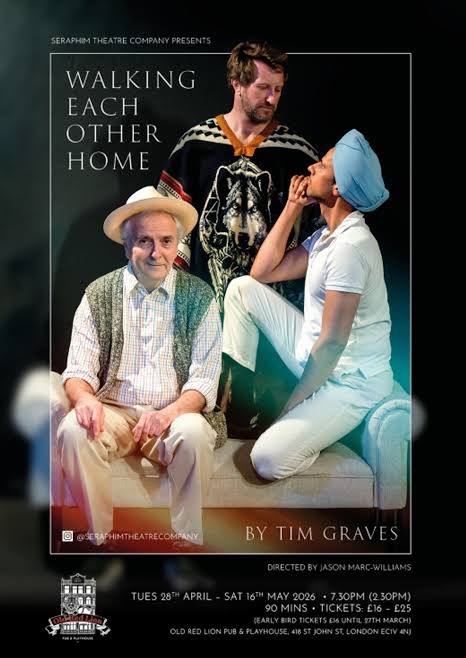
Walking Each Other Home tells the story of Michael Maloney (played by the amazing Edward Fisher), who, after a fairly unpredictable childhood, finds refuge in the isolated Amazon rainforest in search of outlandish ways to heal his inner child after some very intense experiences he had to endure at the hands of his father, Frank (played wonderfully by Christopher Poke). However, as Frank begins to suffer from early-stage dementia, Michael returns home and has to balance the idea of reconciliation with the fact that Frank is, at times, physically incapable of recalling the life-changing trauma he may have caused. From a moral perspective, this idea of overcoming ACEs (adverse childhood experiences) with a father who is slowly losing grasp of his mental capacity is incredibly interesting, as you would expect someone to be remorseful, but Frank’s condition means that he is unaware of what he has done and the effect it had on his own son. As a result, the audience spends the majority of the show torn over where their sympathy lies. Despite being only ninety minutes long (with a short interval in the middle), the show transports every audience member into the cosy yet remote confines of Frank’s Norfolk cottage as father and son attempt to reconcile events that happened years ago. Writer Tim Graves has created a show that carefully yet purposefully explores moments of real and honest connection between an LGBTQ+ child and his father in a way that chronologically moves through moments of reconnection and conflict, allowing the audience to easily follow along and remain captivated throughout. The show, being entirely set in a relatable modern-day family home (specifically, mostly the living room) with very limited props and staging, blends wonderfully with the highly accessible and honest writing of Tim Graves. This makes the audience feel as if they are simply a fly on the wall witnessing these events unfold in Frank’s cottage.
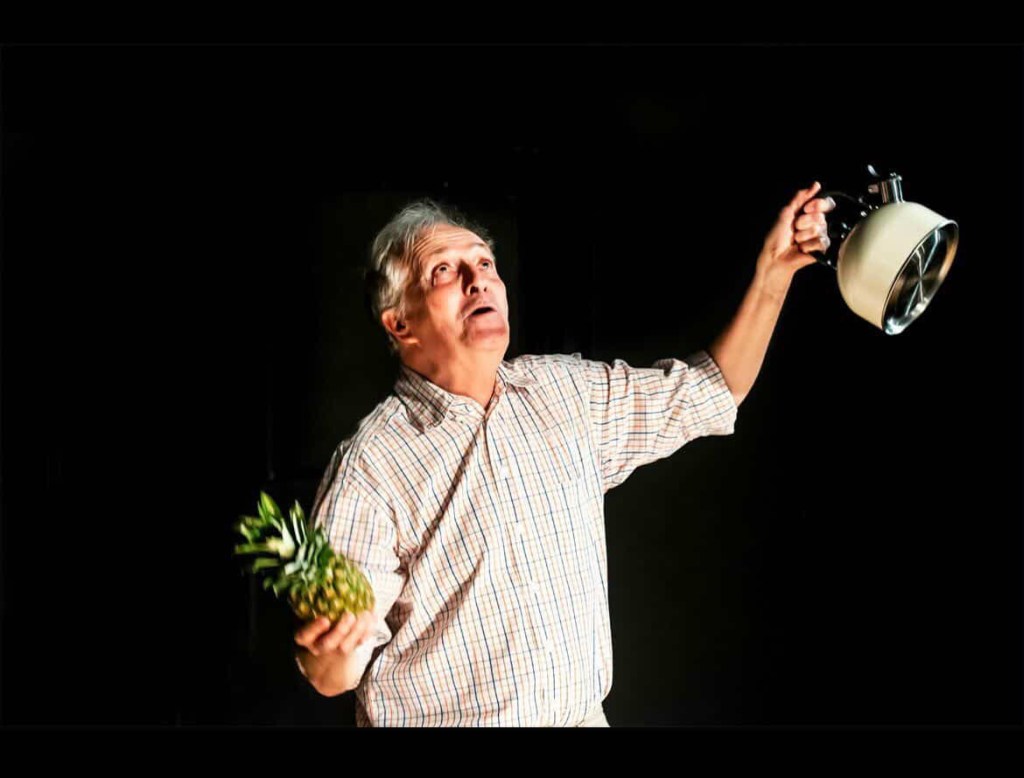
One of the first characters we meet in this production is Frank Maloney (captured flawlessly by Christopher Poke), who is relaxed in his home as we begin to see the decline of his mental state. He imagines visitors, is confused by a surprise visit from his own son, and struggles with maintaining his home due to his dementia. This character is cleverly portrayed throughout the production, jumping between states of clarity and confusion (including multiple moments of singing random songs), which serves as a fantastic depiction of those experiencing similar conditions. Taking on this role must have been a very difficult line to tread, as it would have been easy for the character to become a stereotype or cliché, but Christopher avoids these tropes and instead delivers a very real and honest portrayal of one of the world’s most frightening conditions. In almost complete contrast to this traditionally masculine character, Michael is a much more modern and contemporary person. Not only is he gay (and has to come out multiple times throughout the show due to his father’s condition — something I had not considered before watching this production), but he also pursues more eccentric therapeutic techniques in the Amazon jungle. What is particularly powerful about this show is that the central pair of Frank and Michael are both flawed characters. Michael very quickly loses his temper with his father due to the traumatic experiences he endured as a child, while Frank is dealing with mental limitations and is unable to fully connect with his past actions because of his developing dementia. This again reflects real life, as it is very rare for one person to be entirely in the wrong, and it helps the story truly resonate with audiences because of how relatable and honest it feels.
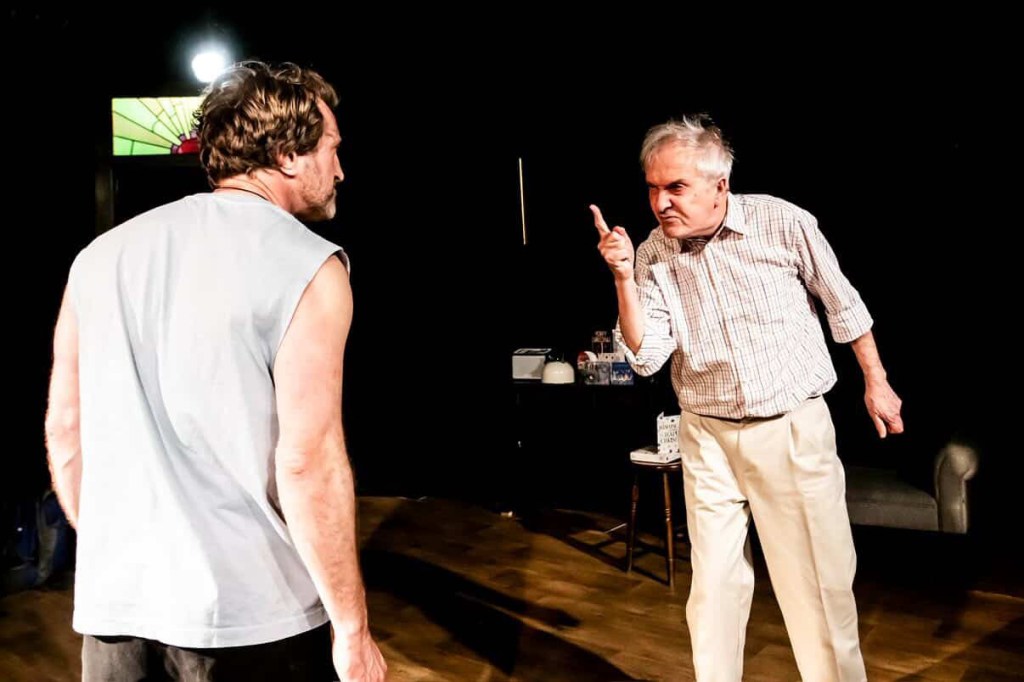
Despite constant conflicts and, at times, explosive fights throughout, it is painfully obvious that Frank and Michael possess immense love for one another, which is a true testament to the talents of both Edward Fisher and Christopher Poke. One of the moments that best showcased this underlying affection occurred when Michael led his father through a rather unconventional meditation practice. Prior to the reflective exercise itself, there is a brilliant scene in which Frank constantly switches back and forth on whether he is willing to participate — exactly as you might expect from someone experiencing the symptoms of dementia. During this sequence, Michael reveals a much more supportive and caring side to his character that the audience had not really experienced up to that point. This unconventional sequence, accompanied by Michael himself on a drum, is a literal breath of fresh air as the scene builds towards Frank tapping into his own childhood memories of climbing a tree with a friend. He is quickly overcome by butterflies, which ultimately leads to another argument between the pair, as “butterflies” had previously been used as a homophobic slur directed towards Michael earlier in his life.

One of the most heartfelt moments in the show, however, sees Michael in the bath being looked after by a young (also gay) Sikh carer, Sandeep Singh (played brilliantly by Amrik Tumber), as the former discusses his religious beliefs. I have to admit that prior to this show I was unaware that the term “Guru” derives from the Sanskrit syllables “Gu,” meaning darkness, and “Ru,” meaning bringer of light, and so a “Guru” is often described as someone who leads others from spiritual darkness into a more fulfilling life. As someone with a passion for languages and word derivations, I personally found this impromptu language lesson very interesting, as it taught me something I did not know before attending this production and allowed me to learn more about contemporary religions. It sprinkled a perfect amount of education into this otherwise deeply heartfelt story. Throughout the majority of the show, Sandeep is presented as the support system everyone strives for — and strives to be — as he constantly shows Frank the perfect amount of empathy while the latter deals with his deteriorating mental condition, all while navigating the more intense and heated moments between Frank and his son. Every time Sandeep steps onto the stage, the scene is instantly lifted due to the joy he spreads throughout, mostly through his entrances featuring traditional Sikh singing, which fits the character flawlessly. As someone with a care-adjacent day job, this idea of being a “smiling brick wall” despite the abuse and anger directed towards him by Frank is something that is constantly discussed in my own work environment. Seeing this represented on stage further reinforced the sense of realism that the show maintained throughout, which I personally found fantastic.

In conclusion, Walking Each Other Home, written by Tim Graves and performed at Old Red Lion Theatre, is an honest and heartfelt depiction of LGBTQ+ family dynamics and the effects of dementia that transports the audience directly into the home of a struggling family. It would have been very easy for this show to become preachy or predictable, but it carefully treads that line, leading the audience to feel immense sympathy for everyone involved. I would rate this production 4 out of 5 stars!


