
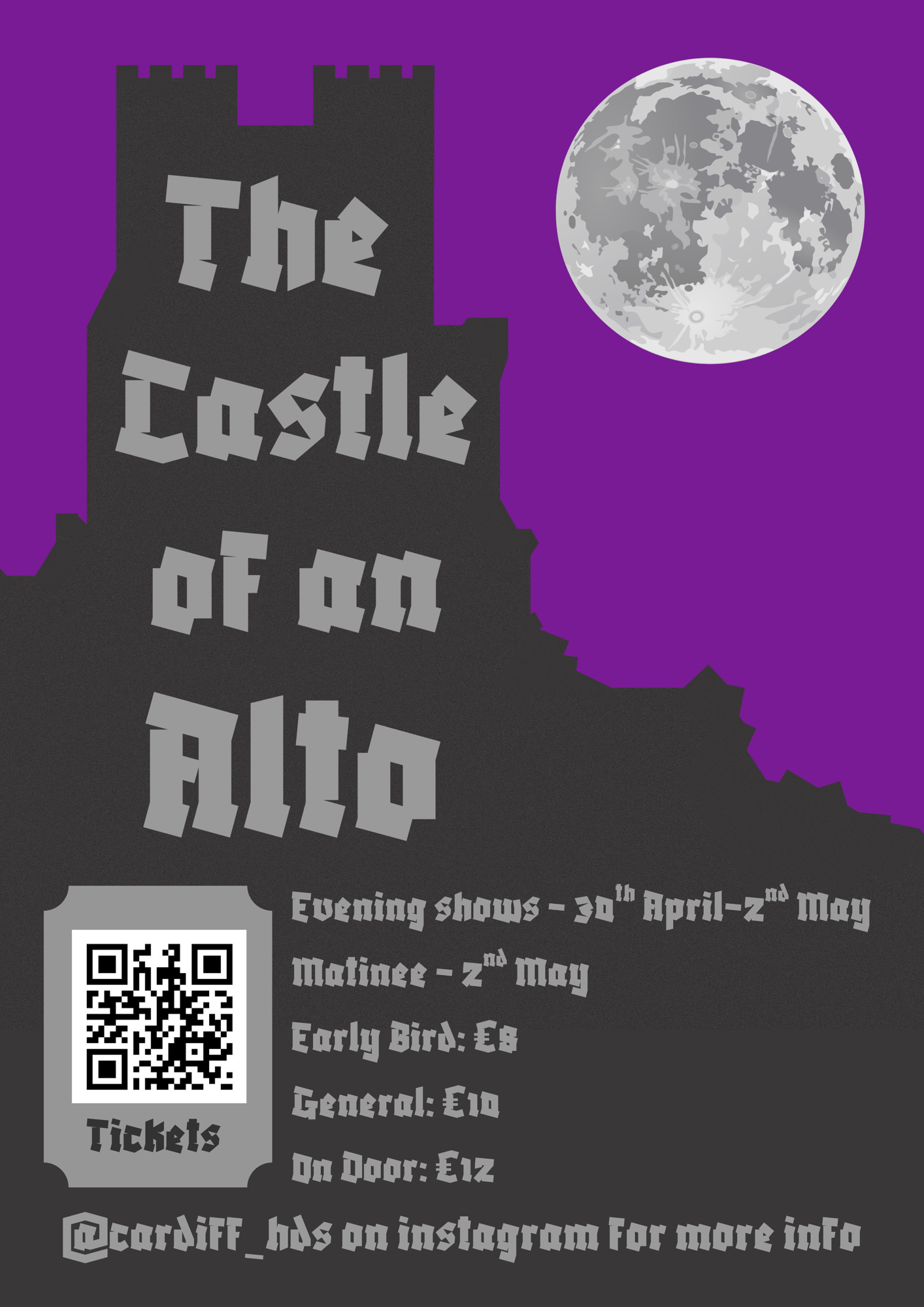
Those who have been following my blog will be aware that almost a month ago we were invited by the fantastic Cardiff Healthcare and Drama Society to see the brilliant Into Twinkletopia (which you can read about here: https://rhysreviews.com/2026/04/13/inside-twinkletopia-production-review/). Similarly to the aforementioned show, The Castle of Alto contains a series of brilliant renditions of popular songs delivered by a wonderful array of talented musicians who are present throughout. This allows the audience to truly appreciate the musical talents of the band, which is very much needed, as instrumentalists are often overlooked in these types of productions. I do have to say, however, that similarly to the earlier show, this production also encountered a series of microphone issues throughout, which at times made it harder for the audience to follow along, as important plot points were occasionally difficult to hear.
The Castle of Alto is a musical retelling of the 1764 Gothic novel by Horace Walpole (but more on him later), which, as an interesting fun fact, is often considered the first Gothic novel ever published. The story follows the lives of the aristocracy residing in the Castle of Otranto, who become increasingly uneasy when one of the princes is mysteriously killed by a falling helmet—something they interpret as a sign of an ancient prophecy. i found it particularly interesting that both Into Twinkletopia and The Castle of Alto heavily revolve around a misinterpreted prophecy, as this cleverly ties the two shows together. This terrible accident causes the royal family to spiral out of control, leading the king—despite already being married to Queen Hippolita—to propose to his recently deceased son’s fiancée, Isabella, forcing her to seek refuge in the local church.
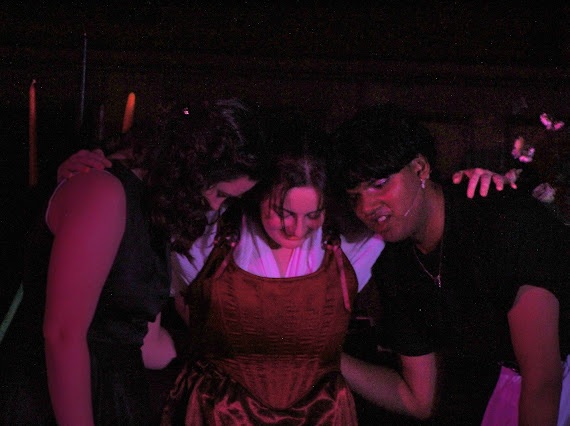
One of the most unique elements of this production was the addition of an overlord-style character and master puppeteer, Horace Walpole (brought to life by the amazing Theo R. Vos), inspired by the original author of The Castle of Otranto. This character effectively takes on the role of narrator, directly interacting with both the audience and the characters in the show. What is particularly clever is that every time Horace steps onto the stage, there is a palpable presence, largely due to Theo’s excellent stage presence. The character opens the show with a short prologue, introducing the plot and setting the “rules” of attending the theatre—something that makes perfect sense given his role as the creator of the story itself. Following this monologue, the character launches into a wonderfully camp and theatrical performance of Barry Manilow’s “Copacabana” (“Her Name Was Lola”), demonstrating his control over the characters while introducing them to the audience. This spooky yet playful opening number not only fits the character perfectly but also introduces the puppet-string prop used throughout, which adds an extra supernatural layer to the production. This plot device reappears at the end of Act One, as Horace regains control of the characters for another high-energy musical number.
The highlight of the entire production, however, was the incredible Amelia Jenkins (who previously appeared as Queen Cassandra in Into Twinkletopia) as Theodore. Starting the show as a prisoner of the castle, Theodore helps Princess Isabella escape a dangerous situation and quickly develops an intense romance. During their escape, Theodore develops feelings for Matilda—the 18-year-old daughter of Manfred and Hippolita (played flawlessly by Laura Marcial). This relationship offers a much more realistic and heartfelt portrayal of teenage romance than others in the show. One of my favourite moments was a delightfully fun and energetic duet between Theodore and Matilda, where both performers exuded such joy that the audience couldn’t help but be swept up in it. Transitioning from the pompous queen in the previous production to this gutsy and earnest role truly demonstrates Amelia’s range as a performer. In addition to her character work, she also showcased impressive athleticism and acrobatic ability, frequently rolling across the stage and being carried by enemy knights.
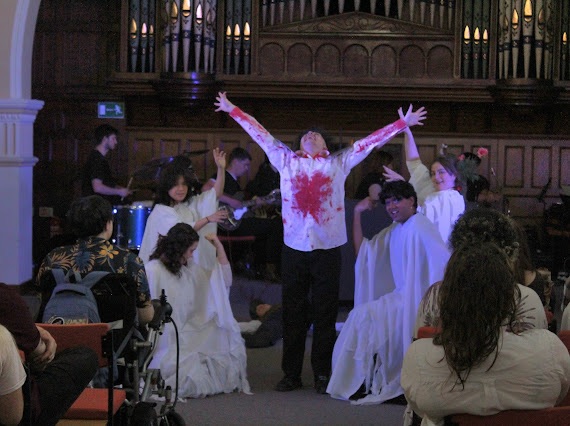
In my opinion, the hardest-working performer in the production was Friday Cox, who took on multiple roles. Having done very little theatre myself, I am aware of the pressure of taking on even one role—let alone three distinct characters, each with their own personalities and physicalities—but Friday handled it effortlessly. We are first introduced to them as a flamboyant and over-the-top devil at the beginning of the show. During this number, they sprint around the stage striking exaggerated poses that had the audience in fits of laughter. Later, they transform into a royal priest with a mysterious connection to a character nearing the end of their life. In this role, they carry themselves with the dignified and purposeful manner associated with clergy. A particular highlight for me was during a fight sequence, where they showcased their acrobatic skills with an impressive cartwheel, matching the physicality displayed by Amelia in the same scene.
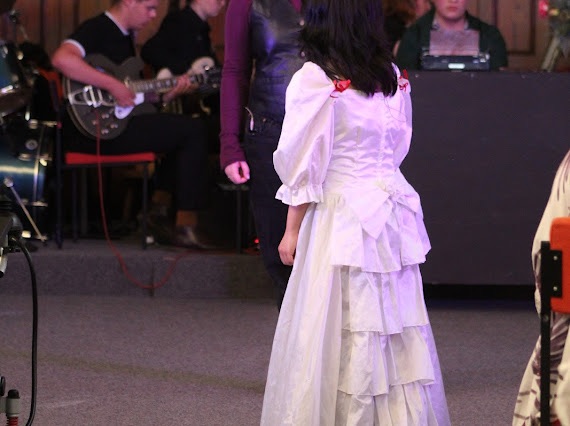
Overall, The Castle of Alto is a wonderfully unique production that celebrates what is considered the earliest Gothic story—something I particularly appreciate as a literature enthusiast. The team successfully transforms the space at Cathays Methodist Church into the eerie halls of medieval Italy, a testament to the hard work of both cast and crew in fully immersing the audience in this fictional world.I would rate this show 3 out of 5 stars.


