
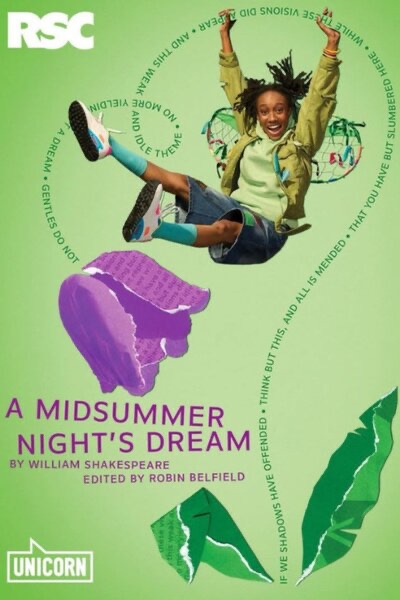
As a qualified English teacher, I think it is basically a prerequisite of the job that any English teacher must be a massive fan of William Shakespeare—and we absolutely do nothing to dispel this stereotype, as we are indeed huge fans of potentially the world’s most famous playwright! Having taught lessons on many of the Bard’s most famous plays, such as King Lear (my personal favourite), Romeo and Juliet, Macbeth, and The Tempest, and actually owning Shakespeare’s complete works, which stand centre stage on my bedroom bookshelf, it’s fair to say I’m well acquainted with his work. I even performed in a high school production of Much Ado About Nothing in my younger years. However, one story I am not particularly familiar with is the iconic A Midsummer Night’s Dream. So, when an exciting email from the Unicorn Theatre landed in my inbox inviting me to the press evening of their collaboration with the Royal Shakespeare Company staging this Shakespearean classic, I knew I could not miss out! Due to circumstances often out of our control, it is not always possible to see Shakespeare performed live, so I always jump at any chance to enjoy a bit of classic culture in the theatre. When producing shows that were initially written over five hundred years ago, it is very easy for companies to modernise the story so that more people will come to see it (due to the perception that Shakespeare’s works can be complex and hard to understand). However, the pairing of the Unicorn Theatre and the Royal Shakespeare Company did not alter the story at all and instead used the original text to great effect. Throughout the entire production, the performers’ lines were projected onto the staging so that audience members could easily follow along. Combined with the wonderful physicality of the actors, this allowed the audience to understand what was going on, even if they were not au fait with Early Modern English.
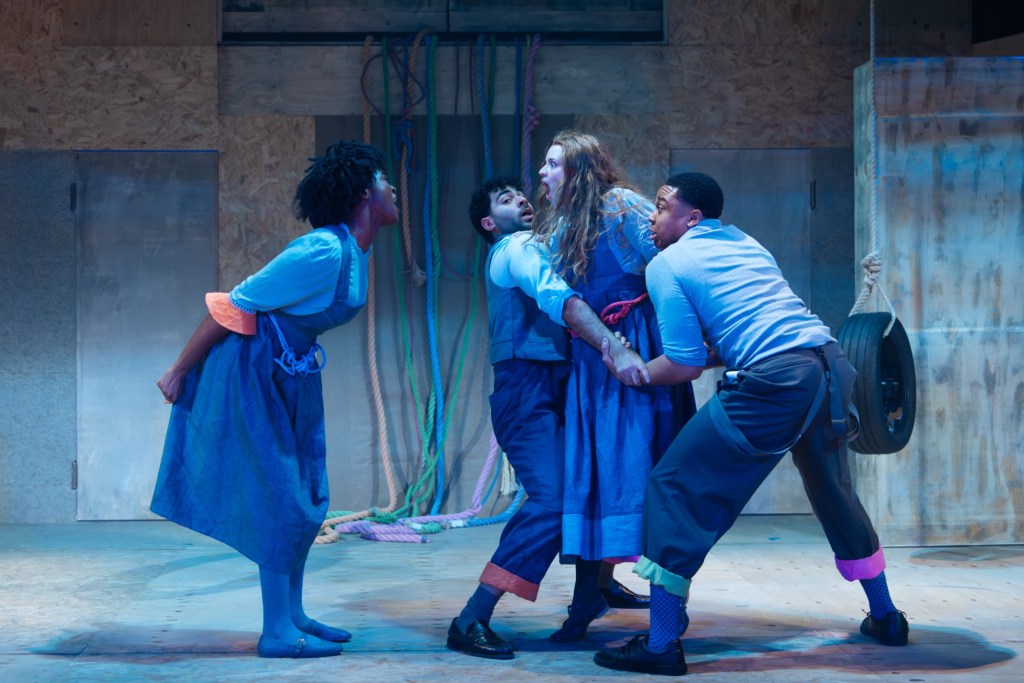
A highlight of this production was the performers’ use of movement. They utilised not only the stage itself but also the audience space to inject immersive elements into the show. Additionally, the actors used their bodies to portray the more supernatural elements of A Midsummer Night’s Dream. When the magical potion is mistakenly used, the actors physically demonstrate the confusion in a way that makes the situation immediately clear, and when the consequences unfold, it is evident that this was not the intended outcome. The audience was also treated to a hilarious dance sequence at the end of the production, which showcased just how talented the cast are as performers. Instead of overloading the show with modern, state-of-the-art production elements, the creative team chose to pay homage to how the play might originally have been staged. They used a single multipurpose set that remained unchanged throughout, along with minimal props, allowing the audience to focus on the plot. Despite this, one area where the production truly excelled was in its use of lighting. As someone not particularly familiar with A Midsummer Night’s Dream, I was initially concerned about keeping track of the characters and their intertwining storylines, but the creative team ensured that each character was clearly identified. In the early moments of the show, as each character appeared on stage, they were introduced through clever use of projected names, sound effects, and freeze-framed poses—creating an almost reality TV-style character introduction sequence. Later in the production, lighting effects were used to support the narrative, projecting onto moving set pieces in a way that demonstrated both the skill of the lighting designers and the precision of the performers.
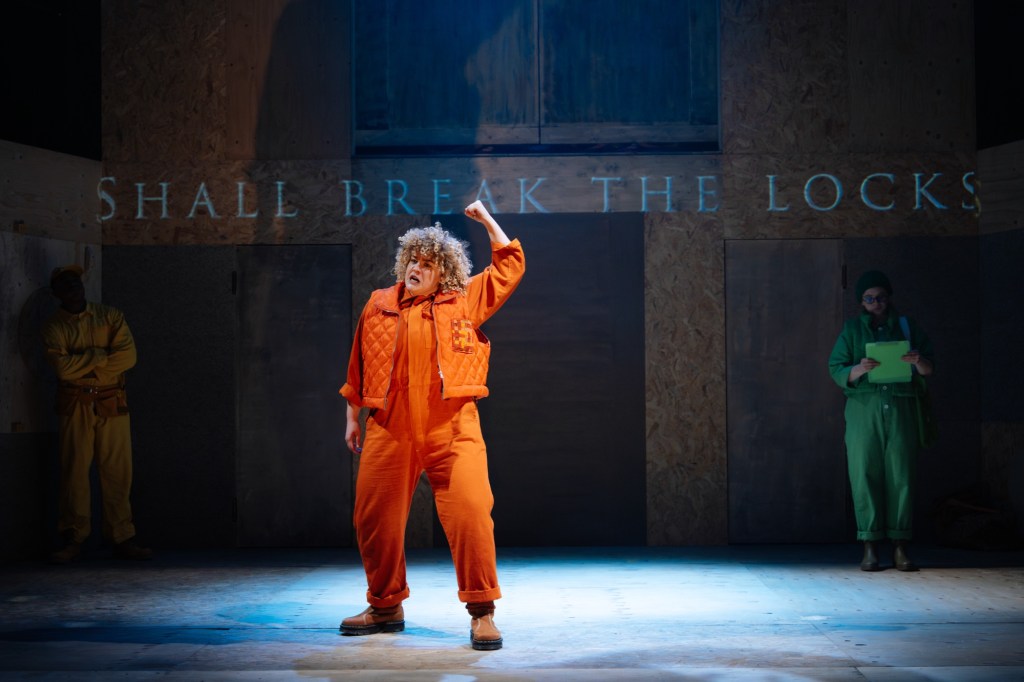
One of my favourite performances came from the fantastic Emmy Stonelake, who took on the role of the overconfident and hilarious weaver, Nick Bottom. From the very first moment they stepped onto the stage, it was clear they would be a scene-stealer, effortlessly engaging with the audience. As well as serving as the main comic relief, Bottom becomes entangled in the hijinks of the mischievous Puck, who “curses” him with a donkey’s head. He also becomes the object of the fairy queen Titania’s misplaced affection (played wonderfully by Amelia Denton) after she awakens under the influence of the love potion. The contrast between Titania’s regal presence and Bottom’s more comedic, almost pantomime-like characterisation was brilliantly executed, with both actors fully committing to their roles. Bottom is also given a pantomime-inspired musical moment, which is not only hilarious but also pays homage to Shakespeare’s original use of song within his plays—once again demonstrating the production’s respect for the Bard.
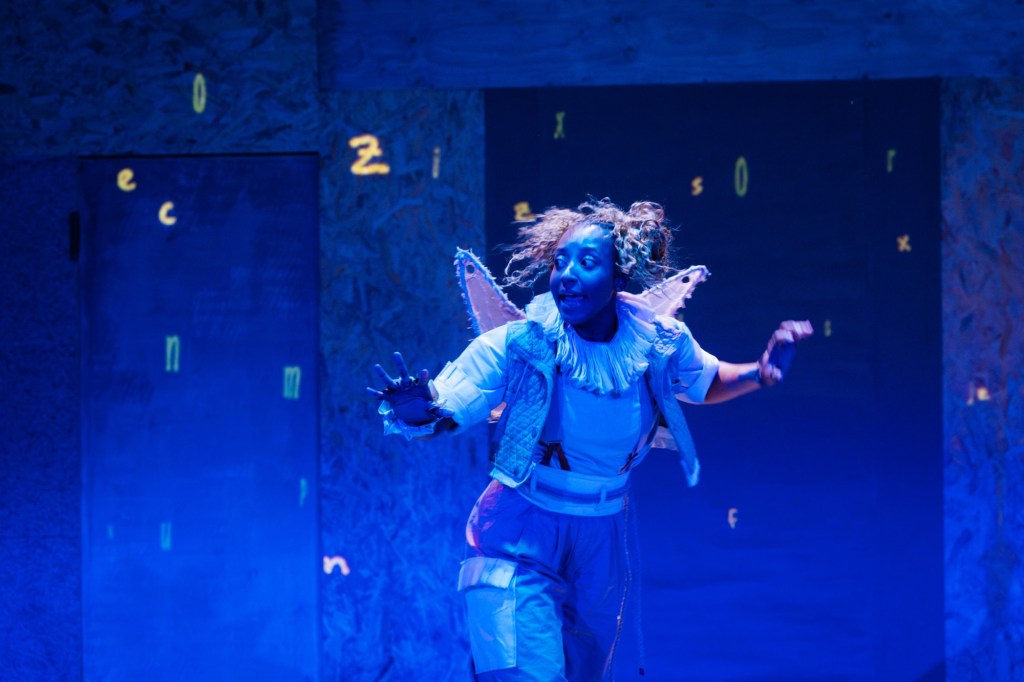
The first character the audience encounters is the magical Puck, brought to life by the brilliant Joséphine-Fransilja Brookman, a fairy-like figure who sets much of the plot in motion while attempting to carry out the orders of Oberon (played by Chris Jared). Puck is introduced by moving through the audience with a mysterious orb, and their fluid, interpretive movements immediately establish the character as captivating and otherworldly. As mentioned earlier, movement is a standout feature of this production, and Puck exemplifies this with a consistently expressive physicality. Both Puck and Oberon make excellent use of the staging’s verticality, effortlessly climbing the set and even utilising tire swings—an inventive touch that suits the forest setting. This level of physical performance adds an extra challenge, but both actors appeared completely at ease navigating these elevated elements.
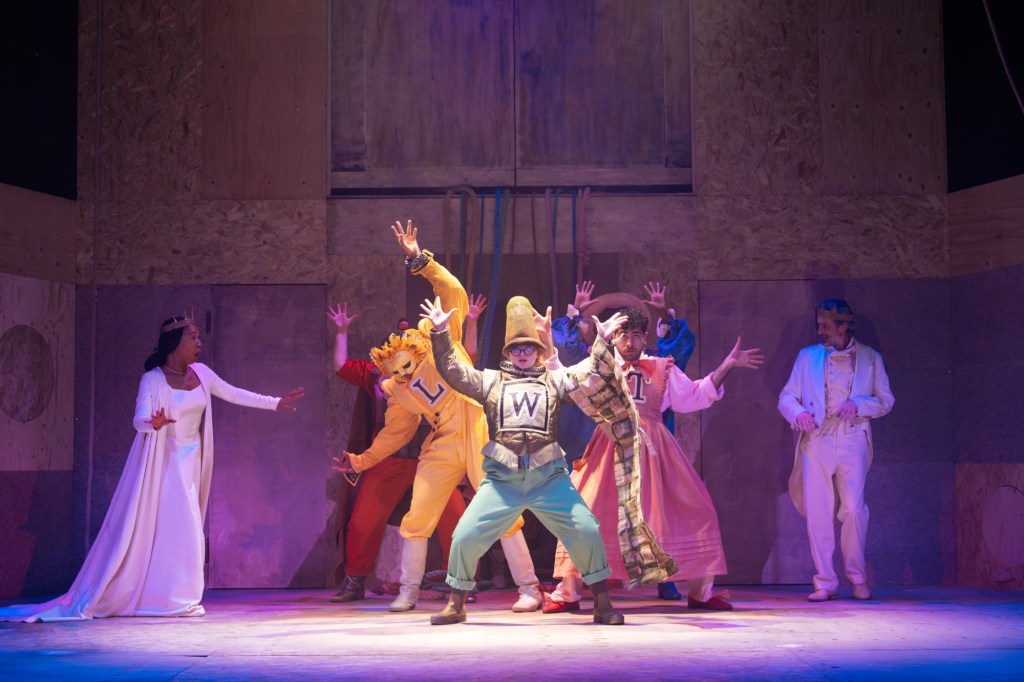
In conclusion, A Midsummer Night’s Dream, presented by the Unicorn Theatre in collaboration with the Royal Shakespeare Company, is a respectful homage to the original text, enhanced by just the right amount of modern theatrical techniques. The result is a production that is accessible and enjoyable for all audiences. Despite being marketed towards a younger audience, it is truly a show for the whole family, blending classic Shakespearean language with humour, physical theatre, and even a lively dance number. I would rate this production five out of five stars.

 Rhysreviews